The demand for skilled electrical professionals continues to grow across Nigeria as construction, manufacturing, renewable energy, and infrastructure development expand. If you’re wondering How to Become a Certified Electrician in Nigeria: Step-by-Step Guide, you’ve come to the right place. This comprehensive guide explains How to Become a Certified Electrician in Nigeria: Step-by-Step Guide, covering everything from choosing the right training program to earning certification and launching a rewarding career.
Whether you’re a school leaver, career changer, or entrepreneur looking to develop practical skills, becoming a certified electrician can open doors to stable employment, self-employment, and long-term financial success.
Why Choose Electrical Installation as a Career?
Electricians are responsible for installing, maintaining, repairing, and testing electrical systems in residential, commercial, and industrial buildings. As Nigeria continues to urbanize, skilled electricians remain in high demand.
- Benefits of becoming an electrician include:
- High demand across multiple industries
- Opportunity for self-employment
- Attractive earning potential
- Practical and hands-on work
- Career growth and specialization opportunities
- Ability to work locally or internationally
With the right training and certification, you can build a sustainable career while contributing to Nigeria’s growing economy.
How Much Can Electricians Earn in Nigeria?
Income depends on experience, specialization, and location.
Entry-level electricians typically earn modest salaries while experienced professionals, contractors, and business owners can earn significantly more through private projects, maintenance contracts, and commercial installations.
Those who specialize in industrial electrical systems or renewable energy often command higher fees.
Steps How to Become a Certified Electrician in Nigeria:
Becoming a certified electrician in Nigeria requires a combination of quality vocational training, practical experience, and professional certification. By following the steps below, you can develop the technical skills and industry knowledge needed to build a successful career in electrical installation and maintenance.
Step 1: Understand the Role of a Certified Electrician
Before enrolling in a training program, it’s important to understand what electricians do.
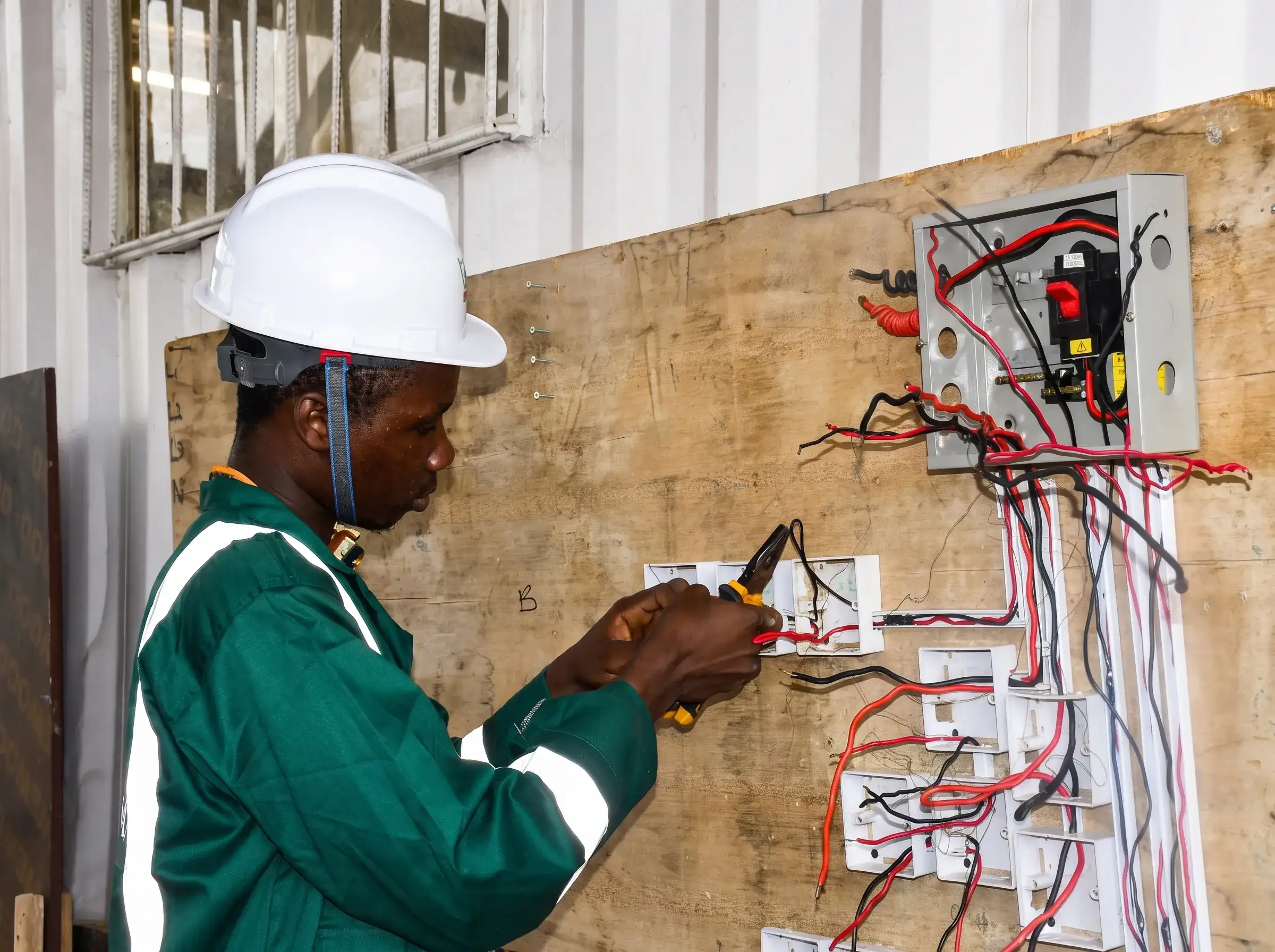
A certified electrician typically performs tasks such as:
- Electrical wiring and rewiring
- Installation of electrical fixtures
- Distribution board installation
- Circuit troubleshooting
- Electrical maintenance
- Reading electrical drawings
- Safety inspections
- Installation of industrial electrical systems
Professional electricians must also understand Nigerian electrical regulations and safety standards.
Step 2: Meet the Basic Entry Requirements
Most vocational training institutions require applicants to:
- Be at least 16 years old
- Have basic reading and mathematical skills
- Demonstrate interest in technical trades
- Possess a willingness to learn through practical training
Formal university education is not required to become a professional electrician.
Step 3: Enroll in an Accredited Electrical Installation Training Program
The most important step is choosing a reputable vocational institution that combines classroom instruction with practical workshop experience.
A quality electrical training program should cover:
- Electrical fundamentals
- Wiring techniques
- Domestic installation
- Industrial installation
- Electrical maintenance
- Motor control
- Electrical safety
- Circuit design
- Troubleshooting
- Practical workshop sessions
Hands-on experience prepares students for real-life electrical projects.
Step 4: Learn Safety Standards and Regulations
Electrical work involves risks, making safety training essential.
Students learn:
- Personal protective equipment (PPE)
- Lockout/tagout procedures
- Safe wiring practices
- Electrical hazard prevention
- Fire prevention
- Emergency response
- Proper tool handling
Understanding safety standards protects both electricians and clients.
Step 5: Gain Practical Experience
One of the biggest advantages of vocational education is practical training.
During your program, you’ll work on:
- Residential wiring
- Commercial electrical installations
- Cable jointing
- Lighting systems
- Distribution boards
- Electrical fault diagnosis
- Generator connections
Practical experience builds confidence and improves employability.
Step 6: Obtain Professional Certification
After completing your training, you’ll receive certification from your training institution upon meeting the program requirements.
Certification demonstrates that you possess the technical knowledge and practical competence required to perform electrical installation safely and professionally.
Employers are far more likely to hire certified electricians than individuals without formal training.
Step 7: Continue Developing Your Skills
Technology in the electrical industry changes constantly.
Professional electricians should continue learning about:
- Smart home systems
- Solar energy installation
- Industrial automation
- Renewable energy
- Energy-efficient electrical systems
- Building management systems
Continuous learning helps increase your earning potential.
Frequently Asked Questions (FAQs) About How to Become a Certified Electrician in Nigeria
How long does it take to become a certified electrician in Nigeria?
Training duration varies depending on the institution and program but typically ranges from several months to one year.
Do I need a university degree?
No. Vocational training provides the practical skills needed to become a professional electrician.
Is electrical installation a profitable career?
Yes. Qualified electricians are in high demand and can earn competitive incomes through employment or self-employment.
Can I start my own electrical business?
Absolutely. Many certified electricians establish successful electrical contracting businesses after gaining sufficient experience.
Where should I receive electrical training?
Join the next batch at Foci Skills Academy
Final Thoughts
Pursuing a career as a certified electrician is a smart investment in your future, offering opportunities for stable employment, entrepreneurship, and long-term career growth. With the right training and hands-on experience, you can develop the practical skills employers value. If you’re ready to begin your journey, enroll at FOCI Skills Academy today and gain industry-focused electrical installation training from experienced instructors to prepare you for success in Nigeria’s growing electrical industry.