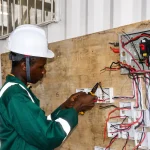


A few years ago, the idea of a university graduate picking up a spanner, a trowel, or a wiring tester would have raised eyebrows in many Nigerian families. A degree was the finish line. The trade was for someone else.
That attitude is shifting. More graduates are now asking whether a practical skill should sit beside their certificate, or even come before the job hunt. If you’re one of them, here’s what’s behind the change and how to think about it clearly.
The Numbers Behind the Pressure
Roughly 1.7 million graduates leave Nigerian universities and polytechnics every year, according to figures cited in a recent BusinessDay analysis. The formal job market simply doesn’t have that many openings. Even the NYSC, which expects to mobilise about 450,000 corps members in 2026, is putting a large number of new graduates into the workforce each year.
Exact unemployment figures are debated, and different sources give very different numbers, so it’s best not to trust any single headline statistic. But the underlying experience is hard to dispute: many graduates spend months, sometimes years, searching for work that matches their degree.
Employers Say There’s a Skills Gap
The problem isn’t only the number of jobs. In April 2026, the Nigerian Association of Chambers of Commerce, Industry, Mines and Agriculture (NACCIMA) warned that the gap between training and the job market is widening, saying graduates often lack the practical, job-ready skills industry needs.
This matters because it changes the question. Instead of “why can’t I find a job?”, many graduates are asking, “what can I actually do that someone will pay for?” A trade gives a direct answer.
Trades Are in Demand, and Not Everyone Is Filling the Gap
While graduates struggle to find work, plumbers, electricians, masons, and carpenters are often hard to find. The same BusinessDay piece describes business owners who had plenty of customers but couldn’t find enough skilled workers.
It also points to why. For decades, degrees have been treated as the respectable route, while trades were seen as low-status work or a fallback for people who didn’t do well academically. That stigma left a gap in the market, and people with real skills are well placed to fill it.
The same article cites a PiggyVest report suggesting only about 5 percent of Nigerians earn above N1 million a month, and argues that many skilled artisans out-earn a large share of salaried graduates. Treat that as encouraging rather than guaranteed. Income in any trade depends on your skill, your reputation, your location, and how well you run your work. But it does suggest a trade can be a serious earning path, not a consolation prize.
Five Reasons Graduates Are Giving Trades a Serious Look
- A faster route to income. A focused training programme can get you job-ready in months. For someone who has already spent years in school, that speed is appealing.
- Self-employment without waiting for a vacancy. With the right skills and tools, you can find your own clients instead of waiting to be hired. For many graduates, that independence is the biggest draw.
- Skills that match real demand. Electrical installation, plumbing, masonry, and carpentry keep homes, offices, and construction projects running. Newer areas like solar and inverter installation are growing as people look for reliable power.
- Protection from a crowded job market. When thousands of graduates apply for the same few roles, a practical skill sets you apart, or lets you step outside that race entirely.
- Government support for skills. Federal and state programmes, including tuition-free technical training with stipends and start-up support in some trades, signal that vocational skills are being taken more seriously than before.
A Trade Doesn’t Cancel Your Degree
One worry holds many graduates back: “Will learning a trade mean my degree was wasted?” Not at all. Your education still gives you things a trade alone doesn’t, such as writing, numeracy, research, and communication. Those make graduates strong at quoting jobs, managing clients, planning projects, and running a business.
A graduate with a trade can often grow faster than someone with only a trade, because they can combine technical skill with business sense. Many see the two as complementary: the degree is the foundation, and the trade is the tool that turns it into income.
Questions to Ask Yourself Before You Start
- Which trade suits you? Think about whether you prefer fixing, building, wiring, or shaping materials.
- Do you want to work for others or for yourself? This shapes the skills you’ll need to add later, like pricing and finding customers.
- Can you commit to hands-on training? A trade is learned by doing, so look for a programme with plenty of practical time.
- What does the training cover? Check that it includes safety standards and not just the basics.
Start Building a Skill That Pays
If you’re a graduate thinking about adding a practical skill, the best time to start is before the pressure builds. At Foci Skills Academy, we train people in plumbing, electrical installation, masonry, and carpentry, with hands-on practice and a focus on job-ready skills and safety.
Visit Foci Skills Academy to see our courses and enrollment details, and take the first step towards a skill that works with your degree, not against it. Spaces are limited each intake, so reach out early to secure yours before the next class fills up.