
Ask around any technical college or training centre in Nigeria and you’ll hear the same four letters again and again: NABTEB. If you’re learning a trade, or thinking about it, you’ve probably wondered what the certificate actually is and whether you need it.
Here’s a plain-language explanation of NABTEB certification, how it works, and where it fits into a career as a plumber, electrician, mason, or carpenter.
What Is NABTEB?
NABTEB stands for the National Business and Technical Examinations Board. It’s the Nigerian body that runs examinations and issues certificates for technical and business education. The board was set up in 1992 to take over exams that used to be handled by foreign bodies, namely the Royal Society of Arts and City and Guilds in London, along with the technical and business exams of the West African Examinations Council. The idea was to tailor these qualifications to Nigeria’s own needs.
In simple terms, NABTEB does for technical and trade education what WAEC does for secondary school: it sets the standard and tests you against it.
The Types of NABTEB Certificate
NABTEB offers several certificates, and it helps to know which is which:
- National Technical Certificate (NTC): the craft-level technical qualification, covering trades like electrical installation, plumbing, carpentry, and block laying
- Advanced National Technical Certificate (ANTC): the higher, master-craft level for people who want to go further in their trade
- National Business Certificate (NBC) and Advanced National Business Certificate (ANBC): the equivalent qualifications for business trades
- Modular Trade Certificate (MTC): a shorter, skills-based option where you are assessed on specific modules of a trade rather than the full programme
For most people reading this, the NTC and the Modular Trade Certificate are the ones that matter. The modular route is especially useful for people who already work in a trade and want formal proof of what they can do.
How the Examinations Work
The main NTC and ANTC examinations are held once a year in November and December. Candidates register through NABTEB using a scratch card, which can be bought from NABTEB’s national office or its zonal and branch offices. The Modular Trades examination is held separately in December, and registration for it normally closes a little later than the main exams.
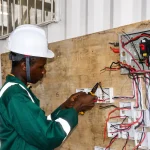
NABTEB describes its examinations as competency-based assessment, which means you aren’t just writing theory. You’re tested on whether you can actually do the work of your trade. The board covers dozens of trades, including a wide range of engineering and construction trades, so there’s a recognized pathway for most of the skills taught in vocational schools.
Registration dates and fees change from year to year, so always check NABTEB’s official website or visit a NABTEB office for the current timetable before you plan.
Why NABTEB Certification Matters for Tradespeople
It gives your skills official recognition. A certificate from a national examining body tells clients and employers that your skills have been assessed against a national standard, not just claimed.
It opens doors that skill alone sometimes can’t. Some employers, contractors, and institutions look for formal certification, particularly for larger projects or structured jobs. Having it widens the pool of work you can apply for.
It supports further study. An Advanced National Technical Certificate can be a stepping stone for people who want to continue their technical education.
It helps you stand out. In a market where many people say they can do the job, a recognized certificate gives you a credible way to prove it.
NABTEB Is Not the Same as NEMSA
It’s easy to mix these two up, especially for electricians. NABTEB is an examination board that certifies trade skills and technical education. NEMSA is the regulator that certifies and inspects electrical installation work. They do different jobs, and an electrician building a serious career may eventually want to look at both. If that’s you, our guide to NEMSA certification for Nigerian electricians explains the second step.
Do You Need It to Start Working?
Not always. Plenty of skilled artisans work and earn without formal certificates, and the right training can get you job-ready quickly. But as the industry becomes more structured, and clients and employers become more selective, having a recognized qualification gives you more options and more credibility. Think of it as an investment in your long-term career rather than a hurdle to clear on day one.
Start With Training That Prepares You Properly
A certificate only helps if the skills behind it are real. The most important step is learning your trade hands-on, with proper safety practice, so you’re confident whether you’re facing an exam, an employer, or a client.
At Foci Skills Academy, we train people in plumbing, electrical installation, masonry, and carpentry with a focus on practical, job-ready skills. If you’re planning your certification path, visit Foci Skills Academy to see our courses and enrollment details, and ask our team how our training fits the certification you’re aiming for. Spaces are limited each intake, so reach out early to secure yours before the next class fills up.