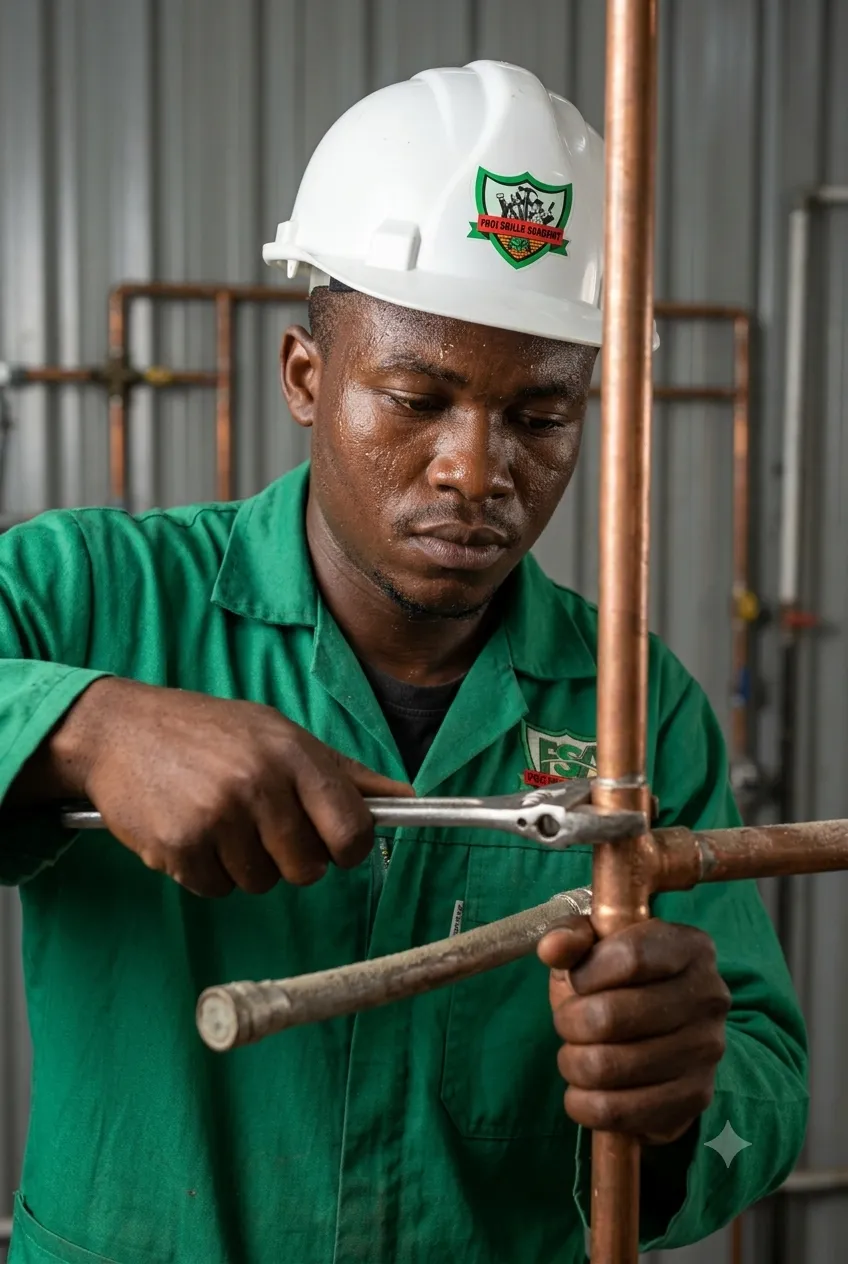
If you’re new to plumbing, one of the first things you’ll notice on site is this: the apprentices who move fastest aren’t always the ones who know the most theory. They’re the ones who came prepared with their own tools.
Showing up empty-handed on your first few jobs can slow you down and make a bad first impression with your master plumber or site supervisor. So before you start your training or apprenticeship, here’s a simple list of the tools worth owning early
Top 10 Plumbing Tools Every Nigerian Apprentice Should Own
1. Pipe Wrench
This is the one tool you’ll reach for constantly. It grips and turns pipes and fittings without slipping, even on rounded surfaces. Get a 10-inch and a 14-inch if you can. Between the two sizes, you’ll be covered for most household jobs, from kitchen sink repairs to borehole connections.
2. Adjustable Wrench (Spanner)
The pipe wrench handles pipes. This one handles nuts and bolts with flat edges, like faucet connections and valve fittings. Because it adjusts to different sizes, it saves you from carrying a full set of fixed spanners when you’re just starting out and working with a tight budget.
3. Plumber’s Tape (Thread Seal Tape)
Cheap, small, and one of the most important items in your bag. This tape wraps around pipe threads to stop leaks at the joints. You’ll use it on almost every job, whether it’s a bathroom fitting or a bigger industrial piping project.
4. Hacksaw
You need something reliable for cutting PVC pipes, metal pipes, and bolts down to size. Pick one with a comfortable handle and blades you can replace easily, because this tool will see daily use once you’re actively working.
5. Plunger
Simple, but non-negotiable. Blocked sinks, toilets, and drains are one of the most common calls plumbers get in Nigeria, and a plunger is often the first thing you’ll try before moving to anything more advanced.
6. Pipe Cutter
For a cleaner cut than a hacksaw can give you, especially on copper or plastic pipe. Cleaner cuts mean tighter seals, and tighter seals mean fewer complaints and callbacks later.
7. Plumber’s Snake (Drain Auger)
When the plunger doesn’t do the job, this is what goes deeper into the pipe to clear stubborn blockages like hair, debris, or root intrusion. Older buildings with aging drainage systems, which you’ll find a lot of across Nigeria, often need this one.
8. Tape Measure
Plumbing rewards precision. A dependable tape measure helps you get pipe lengths and fitting placement right the first time, which saves both materials and your client’s patience.
9. Basin Wrench
A long-handled wrench built specifically for tight spaces, like reaching nuts under a sink or basin where a normal wrench can’t fit. It’s not expensive, and it will save you a lot of frustration on installation day.
10. Safety Gear (Gloves and Goggles)
Not technically a tool, but treat it like one. You’ll be dealing with sharp edges, chemicals, and dirty water regularly. Good gloves and goggles should be part of your kit from your very first day, not something you buy after an injury.
You Don’t Need Everything on Day One
Nobody expects you to walk in with a fully loaded toolbox before your first class. Most training programs introduce tools gradually as your coursework builds, so start with the basics, a wrench, some tape, a hacksaw, and add to your kit as you progress into more advanced modules.
Owning good tools early doesn’t just make training smoother. It also gets you ready for the moment you start taking on real client work as a certified plumber.
Final Wrap-up
Learning to use these tools properly, under real supervision, on real jobs, is what separates a confident tradesman from someone who’s just watched a few videos online. That kind of training is exactly what we built our program around at Foci Skills Academy.
If you’re serious about becoming a professional plumber in Abuja, visit Foci Skills Academy today to see our plumbing training schedule, fees, and enrollment process. Seats fill up fast every intake, so reach out now and secure your spot before the next class begins.