
“So are you studying to be an engineer?” It’s a question many electrical apprentices in Nigeria get asked constantly, and it points to a common mix-up. Electricians and electrical engineers both work with electricity, but they’re genuinely different careers, with different training paths, day-to-day work, and ways of entering the field.
If you’re trying to decide between the two, or just curious what separates them, here’s a clear breakdown of electrician vs electrical engineer as career paths.
What an Electrician Does
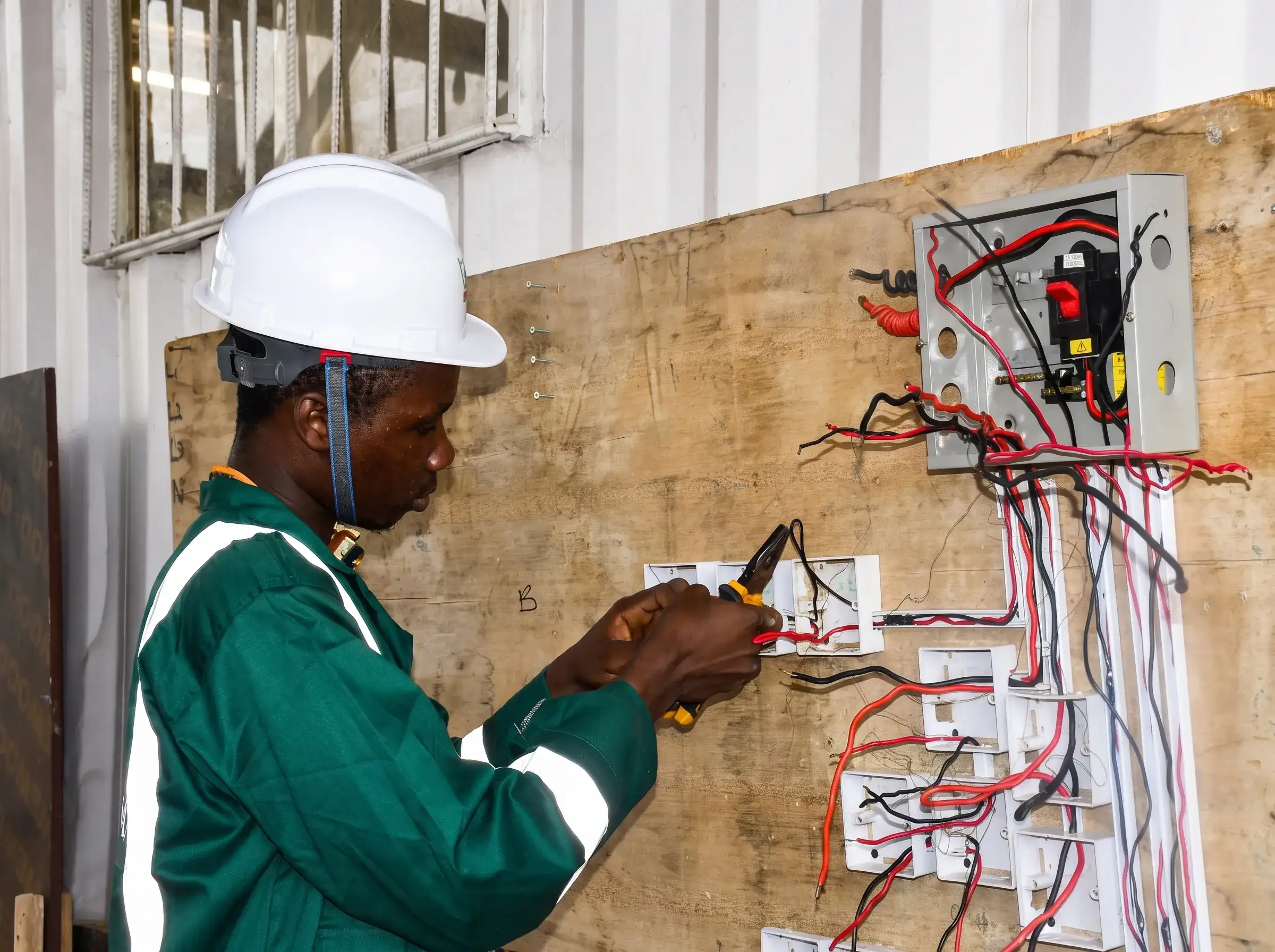
An electrician is a hands-on tradesperson responsible for installing, maintaining, and repairing electrical systems, wiring homes, offices, and industrial buildings, fitting sockets and switches, troubleshooting faults, and increasingly, installing inverter and solar backup systems. Electricians work directly with the physical infrastructure: cables, panels, breakers, and fittings.
This is practical, on-site work. You’re the person called when a socket stops working, a building needs rewiring, or a new installation needs to be fitted safely and correctly.
What an Electrical Engineer Does
An electrical engineer works at a more conceptual and technical design level. Rather than installing wiring themselves, engineers design electrical systems, calculate load requirements for large buildings or infrastructure projects, develop new technologies, and ensure systems meet technical and safety standards before anyone picks up a tool to build them.
Electrical engineers often work on bigger-picture problems too, power grid design, renewable energy systems, industrial automation, or the electronics inside devices and machinery. Their work tends to happen more in offices, design software, and project planning than directly on a job site, though site visits and technical oversight are often part of the role.
Training Paths: A Key Difference
This is where the two careers diverge most clearly.
Becoming an electrician typically involves vocational or trade-focused training, hands-on instruction in wiring, safety standards, and installation techniques, often followed by an apprenticeship period working under experienced electricians. In Nigeria, this path can also involve pursuing NEMSA certification once you’ve built sufficient practical experience. Training timelines are generally shorter than a university degree, and the path is built around practical competency rather than theoretical study.
Becoming an electrical engineer requires a university degree in electrical engineering, typically four to five years, covering mathematics, physics, circuit theory, and system design at a deep theoretical level. After graduation, engineers often pursue further professional registration or chartered status depending on their specialization and employer requirements.
In short: electricians train to do the work, engineers train to design and oversee the systems the work is built around.
Day-to-Day Work: Hands-On vs Design-Focused
An electrician’s day typically involves physical installation work, troubleshooting live circuits, and direct client or site interaction. Problems are solved in real time, often with your hands on the actual wiring or equipment.
An electrical engineer’s day is more likely to involve design software, technical calculations, project planning, and reviewing systems for safety and efficiency before implementation. While engineers may visit sites to oversee installation or resolve complex technical issues, their core work happens before and around the physical build, not during it.
Can One Become the Other?
Not directly, though the two careers can intersect. An experienced electrician with strong technical knowledge might move into supervisory or technical roles, but becoming a fully qualified electrical engineer requires the formal engineering education path. Similarly, an electrical engineer typically wouldn’t have the practical installation skill of a trained electrician without separate hands-on training.
In practice, the two roles complement each other on larger projects. Engineers design the system; electricians build it.
Which Path Is Right for You?
If you enjoy hands-on, practical work, want to start earning relatively quickly, and prefer learning by doing rather than years of classroom theory, electrician training is likely the better fit. It’s also a path that offers real entrepreneurial opportunity, many electricians eventually run their own contracting businesses.
If you’re drawn to problem-solving through design, enjoy mathematics and theoretical study, and are prepared to commit to a longer university path, electrical engineering may suit you better, particularly if you’re interested in large-scale systems, renewable energy design, or working within engineering firms and utility companies.
Neither path is “better” than the other, they simply serve different parts of how electrical systems come to exist and function safely.
Start Your Path as a Skilled Electrician
If hands-on, practical training is the direction you want to take, the most important thing is learning from instructors who teach real installation skills, not just theory. At Foci Skills Academy, our electrical installation program is built around hands-on competence, safety standards, and the practical knowledge that gets you working, and earning, sooner rather than later.
If you’re ready to start training as an electrician in Abuja, visit Foci Skills Academy today to check our training schedule and enrollment details. Spaces are limited each intake, so reach out now before the next class fills up.