Walk into any carpentry workshop and you’ll see both worlds side by side, a hand plane resting near a power sander, a hand saw hanging next to a circular saw. New apprentices often assume the fastest path to competence is jumping straight to power tools, since that’s what looks impressive and gets jobs done quickly. But most experienced carpenters will tell you the opposite: hand tool mastery should come first.
Here’s why that order matters, and a practical breakdown of what to focus on at each stage.
Why Hand Tools Come First
Hand tools force you to slow down and actually feel what’s happening to the wood. When you saw a joint by hand or plane a surface flat with a hand plane, you learn grain direction, pressure control, and how wood behaves under different conditions. That understanding doesn’t disappear once you move to power tools, it becomes the foundation that makes you good at using them.
A carpenter who only knows how to press a trigger on a power saw, without understanding why a cut is going wrong, will struggle to diagnose problems or adjust technique. Someone with strong hand tool fundamentals picks up power tools far faster, because they already understand the woodworking principles behind the machine.
There’s also a safety argument. Power tools are less forgiving of mistakes. Learning careful, controlled movement with hand tools first builds habits that carry over into safer power tool use later.
Hand Tools Every Beginner Should Master
1. Hand Saw
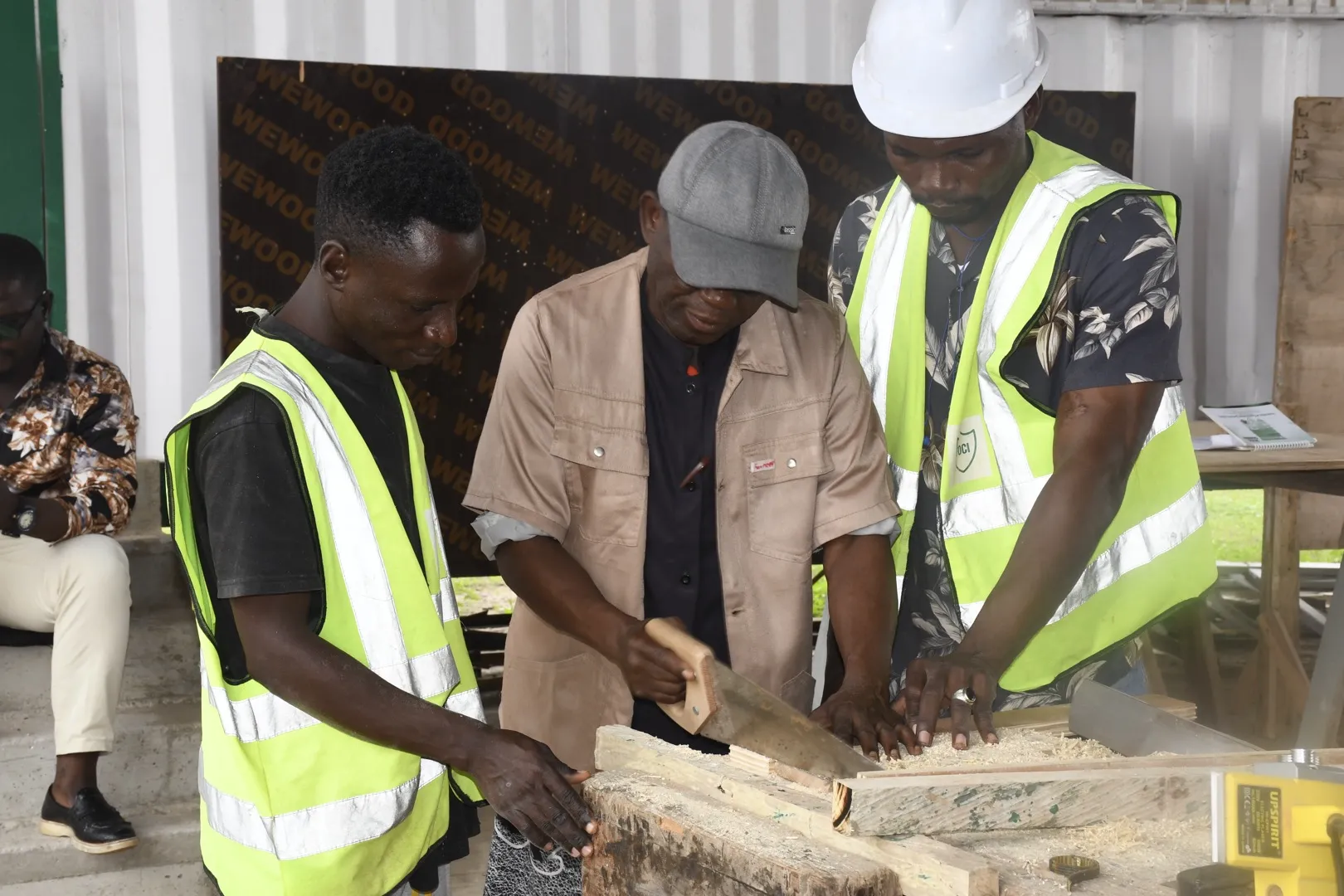
Before touching a power saw, every apprentice should learn to make a straight, clean cut by hand. It teaches control, patience, and an understanding of how much pressure and angle affect the outcome.
2. Chisel and Mallet
Chisels are essential for cutting joints, cleaning out mortises, and shaping detail work that power tools can’t reach precisely. Learning to control a chisel by hand builds the fine motor skill and patience needed for quality joinery later.
3. Hand Plane
A hand plane teaches you to read wood grain and flatten or smooth a surface with control. This is a skill that transfers directly into using power planers and sanders more effectively down the line.
4. Marking and Measuring Tools
Tape measures, try squares, and marking gauges are unglamorous but critical. Accuracy here prevents wasted material and mistakes that no amount of power tool speed can fix afterward.
5. Hand Drill (Brace and Bit)
Before power drills, learning to bore a clean hole by hand teaches control and an understanding of how different wood densities respond to pressure, a skill that makes power drilling far more precise later.
When to Introduce Power Tools
Once a beginner shows solid control with hand tools, straight cuts, clean joints, accurate measuring, power tools become a natural next step rather than a shortcut. At that point, they speed up work that’s already understood, instead of replacing understanding altogether.
Power Tools Every Carpenter Eventually Needs
1. Circular Saw
The power equivalent of the hand saw, used for fast, straight cuts through larger volumes of material. Apprentices who’ve mastered hand-sawing usually adjust to this quickly, since the core technique of guiding a straight cut is already familiar.
2. Power Drill
Speeds up what a hand drill and brace once did manually, essential for repetitive drilling and driving screws efficiently on larger projects.
3. Electric Sander
While hand sanding teaches surface awareness, an electric sander saves enormous time on larger surfaces once that awareness is already built.
4. Router
Used for edge shaping, decorative detailing, and cutting grooves with precision that would take far longer by hand. This tool rewards carpenters who already understand grain direction and controlled movement from their hand tool training.
5. Table Saw or Miter Saw
For carpenters moving into furniture making or larger-scale joinery, these tools offer speed and repeatable accuracy, but they demand real respect and proper safety training given the risks involved with high-speed blades.
Finding the Right Balance
Skilled carpenters don’t choose one over the other permanently, they use both, depending on the job. Fine joinery and detail work often still call for hand tools, even among carpenters who own a full workshop of power equipment. Bulk cutting, shaping, and finishing benefit from power tools’ speed. Knowing when each is the better choice, not just knowing how to use both, is what separates a well-rounded carpenter from someone who’s only comfortable with one approach.
Build Your Foundation the Right Way
Jumping straight to power tools might feel like progress, but it often creates gaps in understanding that show up later in poor-quality joints or wasted material. At Foci Skills Academy, our carpentry training program starts apprentices with proper hand tool fundamentals before introducing power tools, so every skill you build is on solid ground.
If you’re ready to learn carpentry the right way, from the ground up, visit Foci Skills Academy today to check our training schedule in Abuja. Spaces are limited each intake, so reach out now before the next class fills up.